Archive for the 'Cancers' Category


Innovative Method To Identify Cancerous Cells

Wednesday 14 May 2008

cancer cellsRecognizing the distinction between healthy and cancerous cells has traditionally been up to the eye of highly-trained cytologists and pathologists.

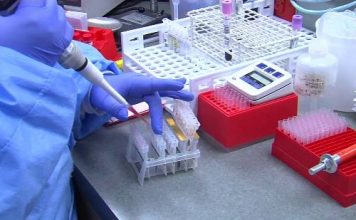
Northeastern University professor Max Diem and his team have developed an automatic method based on vibrational microspectroscopy that identifies the presence of metastatic cancer cells without the need for staining, and without human input.

The innovative method aids classical cytology (where visually inspection is used to detect changes in the morphology of cells obtained from bodily fluids, exfoliation or thin needle biopsy) and classical pathology (where stained tissue sections are examined visually).

“The method is entirely machine-based and computer-interpreted, and thus reduces the workload in diagnostic laboratories,” added Diem. “It allows us to increase the overall accuracy and decrease the time required to render medical diagnoses.”

“We have identified three major milestones for this particular research,” said Diem. “We want to develop a rapid sample preparation methodology, refine the imaging instrumentation, and construct reliable databases and algorithms for the detection.”

Source: ScienceDaily

If you're new here, you may want to subscribe to our RSS feed!


Identify The Ovarian Cancer In Early Stages To Avoid Complications!

Monday 24 March 2008

ovarian cancerMost of the times ovarian cancer is called as silent killer as it does not show any kind of symptoms or manifestations of cancer till it reaches to the advanced phase of cancer.

Most of the women, almost one third of the total population, can suffer with some or the other type of cancer in their life time and almost one half of this percentage are experiencing cancer in their ovaries.

Identify the cancer in early stages in order to avoid complications

The early symptoms of an ovarian cancer are very mild and difficult to identify. Some of the early signs of ovarian cancer which can help you to identify the abnormality in the growth of ovarian cells are given here.

Whenever you notice these abnormalities, immediately consult the doctor for proper prevention of cancer.

  • Experiencing abnormal bleeding.
  • Swelling in the abdomen which is often accompanied with a pain.
  • An abnormal or unusual feeling of discomfort in the pelvic region.
  • Unusual indigestion problem, formation of gas or bloating that is not giving any relief even after the use of antacids.
  • Severe pain during sexual intercourse.


Identify And Treat The Pancreatic Cancer Before It Reaches The Last Stages!

Sunday 16 March 2008

pancreatic cancerPancreatic cancer is one of the serious cancers that spreads rapidly and rarely detected in its early stages.

In United States, it is the fourth common cancer and is responsible for more than 33,000 deaths a year.

In spite of much advancement in the fight against cancer, the diagnosis of pancreatic cancer is extremely poor.

The reason is this cancer is often not suspected and diagnosis in early stages is difficult. Pancreatic cancer symptoms are asymptomatic that can be easily ignored or related to other diseases.

Yellow skin and eyes (Jaundice):

If you have pancreatic cancer, jaundice can develop, which makes your skin and eyes yellow. It can result in jaundice, when bilrubin, a breakdown product builds up in the body.

Bilrubin is a fluid produced in the liver that is eliminated in the bile normally. But, if the bile flow is blocked by the pancreatic tumor, your skin and eyes can turn to yellow color with excess pigment from bilrubin.

Your urine becomes dark in color and stools become light in color as bilrubin does not reach the bowel due to the blocked bile duct. Itching can also result when bilrubin builds up in the skin.


Is Radiotherapy A Best Treatment For Bladder Cancer?

Monday 3 March 2008

bladder cancerA wide range of treatment options are available for treating your bladder cancer such as surgical procedures, radiation therapy, biological therapy, chemotherapy, radio therapy, etc.

A recent study has found that the survival rates among all bladder cancer patients who are treated with radio therapy were as same as those who were treated with surgery to completely remove the bladder.

Important facts about radiotherapy:

Radiotherapy is used to treat cancer with the help of high energy rays, which are capable of destroying the cancer cells while doing comparatively as little harm as possible to your normal body cells. It is more often used for bladder cancer treatment as an alternative to surgery, which is necessary if the cancer comes back.

This kind of bladder cancer treatment is normally given for you in radiotherapy department as a sequence of short regular sessions.

Treating with radiotherapy doesn’t mean to remove your bladder, but you’ll need to have cystoscopy, usually for every 3 months or so in order to ensure that the bladder cancer has not come back.

This therapy for bladder cancer doesn’t make you radioactive and it is completely safe and harmless for you to be with other people including your children after the treatment.


Melanoma: Identify The Unusual Moles On Your Skin!

Wednesday 27 February 2008

MelanomaInitial or early stages of melanoma can be treated easily but if the cancer reaches advanced stages, then it is very difficult to treat the cancer and becomes fatal for you.

This is the most common type of skin cancer, which spreads throughout your body and capable of causing death.

Melanoma usually develops in your skin cells, called melanocytes, which produce melanin, a pigment responsible for your color of skin, hair and eyes.

Most of the melanomas are black or brown in color. Some of the melanomas can appear in your skin color and can also occur in pink, blue, red or white in color.

The exact cause of melanoma is still unknown but it is believed that over exposure of your skin to ultra violet radiation, which continuously emerges from sun and also tanning of lamps or beds greatly increases the risk of melanoma on your skin.

How can you identify the growth of melanoma on your skin?

Most of you can get confused with a mole and over growth of melanin on your skin [Identify Skin Cancer Mole]. The ABCDE rule can be very helpful for you to identify the moles on your skin which differ from melanomas. The rule is described as follows:


Helpful Herbs For Bone Cancer Treatment!

Thursday 21 February 2008

Bone CancerHerbs can be used for the treatment of bone cancer. Herbal therapies can make treatment of the disease more effective and bearable.

However, Herbal medicines used in the treatment for bone cancer cannot be replaced by the normal medications.

Certain herbs, which are helpful for you in treating bone cancer are given here. For greatest benefits, choose the one which is appropriate for you after discussing with your health care provider.

Herbs used for bone cancer treatment:

Generally, using herbs can be the safest way to strengthen and tone your body systems. It is very essential for you to seek medical advice before you start any new treatment in order to avoid adverse effects. Some of the major herbs used for treating the bone cancer include:

  • Green tea (camellia sinensis): A daily dose of 250-500 mg of this consistent extract can improve your immune system. It acts as anti-oxidant and also anti-cancerous substance and fights against the development of cancer cells, responsible for bone cancer in your body.
  • Cat’s claw (uncaria tomentosa): This herb can be helpful in providing anti bacterial and anti fungal effect to your body. In addition to this, a daily intake of 20mg of this consistent extract three times in a day can be used in the treatment of bone cancer.


Stages Of Colon Cancer To Determine The Extent Of The Cancer!

Tuesday 15 January 2008

Colon cancerColon cancer, as the name suggests, is the cancer that affects the colon.

This cancer also originates in the rectum, hence the name rectal cancer or colorectal cancer.

The colon and rectum makes up the large intestine, which is the lower part of the digestive tract. The large intestine lies in the abdomen between the small intestine and the anus.

In the United States, it is third most common cancer in both men and women. It is found that men have a one in nineteen chance and women have a one in twenty-nine chances of developing colon cancer in their life.

The colon cancer starts developing from an existing growth on the inner lining of the colon or the rectum. These growths are called polyps. Once cancer forms within a polyp, it ultimately starts to grow into the wall of the colon or rectum, damaging the organs and tissues surrounding them.

Stage Of Colon Cancer

The colon cancer can develop in five different stages (0-4) along with other stage known as recurring stage. The staging indicates the extent of the cancer from the original site to other parts of the body.

Stage 0


Short Term Hormone Therapy Delays The Progression Of Prostate Cancer

Thursday 3 January 2008

According to the recent study, short-term androgen deprivation therapy (ADT) helps to lower the testosterone levels which delay the progression of prostate cancer in some patients who were treated with radiation.

The duration of this therapy is 4 months before and during radiation. It was found that this therapy slows down the progression of cancer by as much as eight years in patients with high risk, locally advanced disease.

Also, researchers confirmed that there is no risk of heart diseases among the patients treated with ADT when compared with patients only treated with radiation therapy.

But ADT is associated with an increased risk for diabetes, osteoporosis and other health conditions. The study also stated that men who took hormone therapy were 25% more likely to be alive after 10 years.

To know how beneficial the hormone therapy is, visit:

http://www.webmd.com


Development Of New Methods In The Treatment Of Mesothelioma Cancer!

Wednesday 19 December 2007

mesothelioma cancerAsbestos exposure causes mesothelioma cancer, which is a very rare cancer on the earth.

Asbestos is a fibrous material and a deadly carcinogen that causes mesothelioma and asbestosis.

It has been established that there is a link between mesothelioma cancer and asbestos exposure, but the symptoms of this disease cannot be seen until years or even decades (usually 30-40 years after exposure to asbestos).

However, the first case of mesothelioma with a link to asbestos exposure was confirmed in early 1898.

Almost 60-75% of the individuals will get mesothelioma with a history of exposure to asbestos although there are some incidents where the individuals suffered from mesothelioma without exposure to asbestos.

According to the research, workers of the construction industries are at highest risk of getting mesothelioma cancer due to inhalation of asbestos.

Depending on the location of the disease, stage of the disease, and patient’s age and health, there are several treatment options, which include chemotherapy, radiotherapy or radiation therapy, surgery, and palliative care.

As mesothelioma cancer is hard to control, National Cancer Institute is supporting to find new treatments and ways to use current and established treatments.


Colonoscopy To Detect The Presence Of Colorectal Cancer!

Monday 26 November 2007

colonoscopyA colonoscopy is an endoscopic examination of the colon (large intestine) using an instrument called a colonoscope, a small camera attached to a flexible tube.

According to Frederick Cason, MD, associate professor of surgery at The University of Toledo, the best way to check for colorectal cancer is through colonoscopy.

Colorectal cancer is also known as colon cancer or bowel cancer.

It is one of the most common cancers in the United States affecting 140,000 people every year. This type of cancer usually develops in the colon or the rectum. The colon and rectum are the parts of the digestive system, which is called the gastrointestinal (GI) system.

A colonoscopy is normally performed to visually check the entire colon and rectum for the presence of any abnormalities.

Colonoscopy enables the physicians to check for and remove potentially cancerous polyps or tumors and to locate the invasive cancers at an early stage” says Dr. Cason.

According to Isam Daboul, MD, chief of gastroenterology, the patients can fall into one of the three categories: average-risk, moderate-risk or high-risk.

The American Cancer Society recommends everyone to begin routine colonoscopy screening for colorectal cancer at age 50 or earlier.


Next Posts »» «« Previous Posts