Archive for the 'Urology' Category


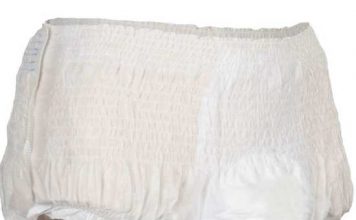
Treatment Options Help You Take Control Of Urinary Incontinence

Wednesday 26 September 2007

For older adults, increased urinary frequency is fairly common. “As people age, in general, the bladder does lose some of its capacity. The Journal of the American Medical Association reports that the condition affects about 200 million people worldwide.At least one out of every 10 people over the age of 65 experiences UI. Despite its prevalence, the stigma surrounding UI causes many people to hide the fact that they have the problem, even though it can significantly affect their quality of life.For related information on treatment options of urinary incontinence, visit:

http://www.medicalnewstoday.com

Urinary incontinence is common in elderly people. Urinary incontinence is caused by many factors. Stress, medications, urge and overflow can cause urinary incontinence.

Stress incontinence:

It is caused due to the increase in pressure from within the abdomen such as when sneezing, laughing, coughing and lifting heavy weights. This can happen when pelvic muscles are weakened.

Medications:

Some medications such as high blood pressure drugs such as doxazosin and prazosin and muscle relaxants can cause urinary incontinence.

Urge incontinence:

In this type, you feel strong urge to pass urine in small amounts. This occurs due to the bladder wall muscle called as detrusor muscle, which will be overactive. It contracts to squeeze out urine before bladder is full.

If you're new here, you may want to subscribe to our RSS feed!


Cranberries To Treat Bladder Infection!

Wednesday 12 September 2007

bladder infectionCystitis is another name for bladder infection. It is the infection and inflammation of the urinary bladder. So, it is also called as urinary tract infection (UTI).

Don’t get confused with both the names. Mainly it is a bacterial infection that affects any part of the urinary tract.

There are many types of cystitis among which bacterial cystitis, interstitial cystitis, and hemorrhagic cystitis are few types.

Bladder infection is the most common type of urinary tract infection. Kidney infection is another type of UTI and also called as pyelonephritis. It is a serious condition and if recognized early and treated, you can protect your kidney from damaging permanently.

According to the studies, one in every five women will develop bladder infection. When you are affected with this problem, you will feel like you need to urinate frequently and incontinence is possible. You will also experience burning pain while urinating and you will observe blood in the urine.

Some people think that bladder infection is the result of faulty anatomy or having too much sex. It is totally wrong and it is just the result of an automatic failure to clear the contents of the bladder efficiently during emptying.


Risk Factors For Urinary Stone Formation In The Morbidly Obese

Monday 10 September 2007

urinary stone formationObesity can increase the risk of urinary stone formation. Kidney or urinary stones are formed out of crystals in the urine.

The stones will be in the solid form, which are formed from the substances excreted in urine.

When these waste substances do not dissolve completely in urine, they form into microscopic particles and slowly grow into stones.

When water and other substances are out of balance, such as from dehydration, substances present stick together and build up to form stones.

In many cases, crystals will be very small and pass out your body without any harm. Sometimes, these crystals build up inside your kidney and larger stones will be formed.

Once the stone becomes too large, urine flow will be blocked to come out of kidney and therefore it can cause pain, pressure and infection. If the stone moves through the ureter tube from the kidney, it causes pain.

While moving if the stone gets stuck, infection occurs. Based on the size and place of stone, kidney damage can be caused if kidney stones are left untreated. When acid levels of the urine are too high, uric acid kidney stones will be formed.


Greater Risk Of Morbidity When Chronic Kidney Disease Patients Are Overweight

Tuesday 14 August 2007

For patients with chronic kidney disease (CKD), the risk of elevated levels of parathyroid hormone (PTH), or hyperparathyroidism — a significant complication that increases the risk of cardiovascular problems and death — increases along with body weight, reports a study in the September Clinical Journal of the American Society of Nephrology.

Obesity is an important risk factor for chronic kidney disease. The risk factor of chronic kidney disease is tripled for both men and women who are obese or Body Mass Index (BMI) is 25 or higher.

“We knew that in people with normal kidney function obesity leads to impairment in vitamin D metabolism and elevated PTH levels, but this phenomenon was never studied in patients with CKD,” comments lead author Dr Csaba P. Kovesdy, of Salem VA Medical Center, in Salem, Va. “Since both obesity and hyperparathyroidism are very complex problems in CKD, establishing an association between the two is important because of potential prognostic and therapeutic implications.”

Parathyroid hormone plays an important role in maintaining normal bone structure. When hyperparathyroidism develops, it can lead not only to bone abnormalities but also to increased rates of cardiovascular disease and death. Although decreased kidney function is the main reason for hyperparathyroidism in CKD, other factors can also affect PTH levels.


Next Posts »»